Business Education, Fintech, Personal Finance

Inflation: The Biggest Lie You’re Being Told? Or Sold?

The Players in the Inflation Game!

They tell you inflation is “cooling.” But your grocery bill, your rent, and your gas tank say otherwise. So who’s lying?

Politicians: Masters of Spin

Politicians love low inflation—on paper.
Why?

  • It makes them look like they’ve got things under control.
  • It hides their screw-ups.
  • And it keeps voters calm long enough to win the next election.

They don’t want you angry—they want you distracted.

The Ultra-Rich: Silent Winners

Guess who else loves “low” inflation? The ultra-rich and their corporations.

  • Stocks soar.
  • Wages stay flat.
  • Borrowing stays cheap.
  • And you swipe your credit card more often.

Every fake “inflation is under control” headline pumps their portfolios higher—while your paycheck buys less.

The Great Illusion

Official inflation numbers aren’t fake—they’re engineered. They exclude what really hurts: shrinkflation, housing, healthcare. The stuff you can’t escape.

So when they say 3%, and your life feels like 10%? That’s not bad math. That’s the system working exactly as designed.

The Ugly Truth

Low inflation headlines = political wins + billionaire profits.
Real inflation = your daily struggle.

And the gap between the two? That’s where the lie lives.

Because in this economy, the rich get richer, the politicians get re-elected, and you get the receipt.
Business Education, Career Management, Fintech, Options Trading, Personal Finance

US Equity Markets are at their Peak! So What?

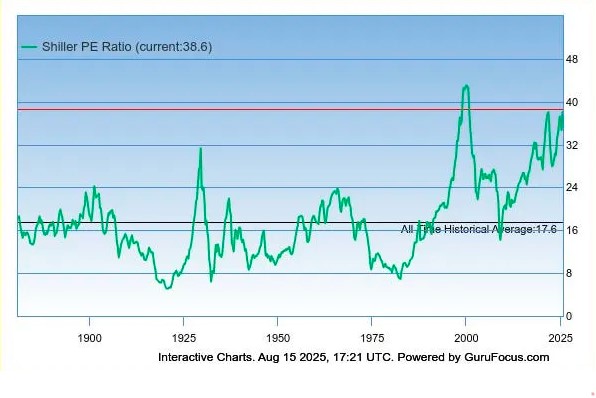
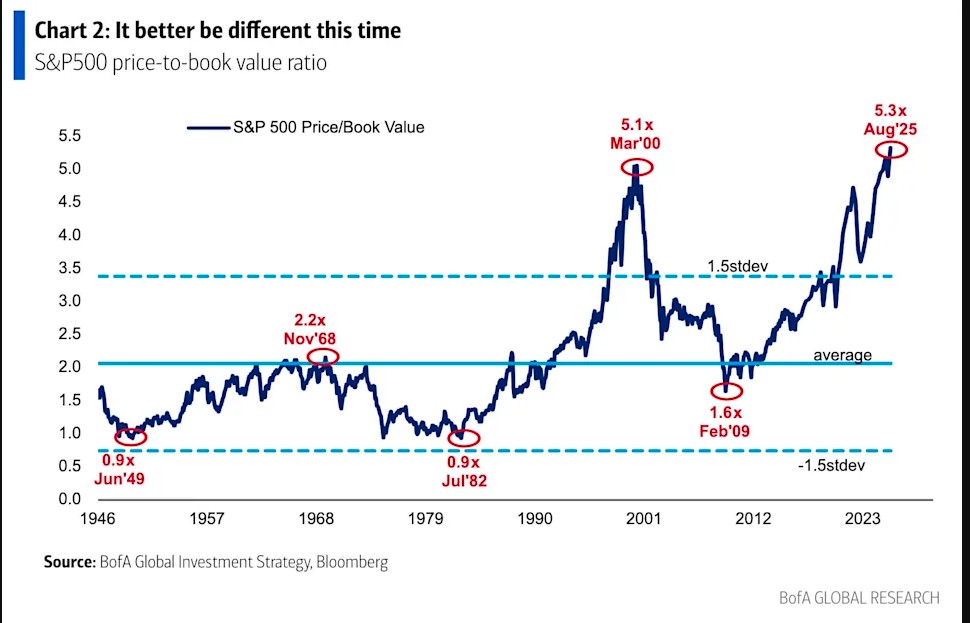
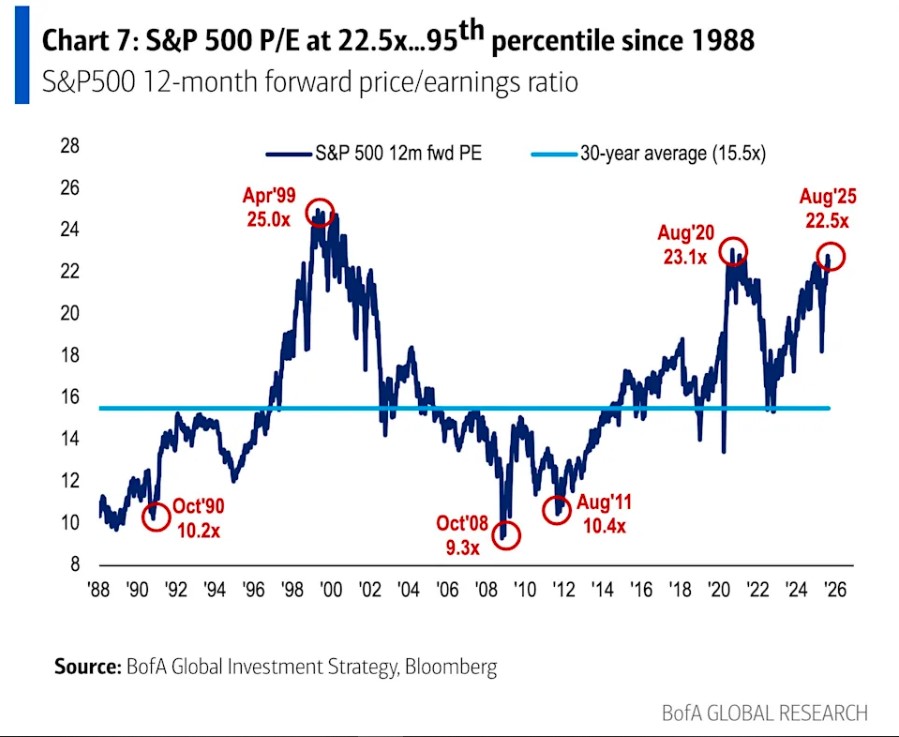
So what? Really? The question should be, What now? I like ratios. Because, not many things in investing are absolute. That’s why PPP adjusted GDP is more meaningful than GDP. PE ratio is one metric that many pros and non-pros use before investing. But more interesting than ratios is their historic variations. So, I looked at the historic values of PE, Book-to-Price, and CAPE ratios of S&P 500. The charts are interesting and I concluded that the risk-reward is not what I’m used to and consequently, I’m reducing my exposure.

Firstly, the Book-to-Price is 5.3X and it’s the highest ever. Even during dotcom era, it was only 5.1X. You may say, so what, but I say, not for me.

Secondly, the PE ratio for S&P500 is at 22.5X while it was 25X during dotcom. In other words, it’s in the 95th percentile since 1988. Again, the message for me is, reduce exposure. So, I did.

Thirdly, CAPE is as high as it was during dotcom. I don’t like that either. For me, it’s one more validation for my decision to reduce exposure.

One more ratio that’s not used often but I find helpful is Buffett’s indicator. It’s the ratio of total US stock market cap against the GDP. “If the percentage relationship falls to the 70% or 80% area, buying stocks is likely to work very well for you. If the ratio approaches 200% — as it did in 1999 and a part of 2000 — you are playing with fire,” he said once and I like it. Today, it’s at 213%, much higher than dotcom levels.

So, I’m putting my trader hat on for a few weeks. When I’m in doubt, I tend to morph into a trader. This approach has worked for me. But you may say, the earning may grow into the high valuations and lower these ratios. It very well could happen, and you may get your ‘I told you so’ moment! However, I don’t mind giving up big profits for my sleep. But never the other way around! I really like my sleep people.

Business Education, Career Management, Personal Finance, Vision

Introducing Butterfly Limit

I mentioned the Butterfly Limit in class in passing. I created this to explain a status. Here are the details.

I created this a few years back and I have written a chapter in my book on Butterfly Limit (BL).

BL is a status that affords you the freedom of your own hours and domain of work and thus, control over your time. It’s the hallmark of autonomy and flexibility we all long for. What are the essentials for BL? To achieve BL you need a blend of domain expertise, accountability, discipline, goal-setting, resilience, proactive relationship-building, and above all, self-discipline. See how you measure in the following criteria!

1. Self-Discipline: Manage your time and stay productive independently.
2. Goal Setting: Define clear professional goals and areas of focus.
3. Resilience: Be open to changes.
4. Expertise: Build strong knowledge in your domain.
5. Relationship-Building: Build trust and support for your autonomy.

Personal finance (PF) plays an essential role in achieving BL as financial stability is key to attaining the freedom and autonomy this status offers. Here’s how: PF allows you to build a strong financial foundation, reducing dependency on rigid job structures. Savings, investments, and an emergency fund give you the flexibility to prioritize fulfilling work over fixed hours or traditional roles. With sound PF, you’re better equipped to handle income fluctuations that might come with flexible or self-directed roles. A well-managed budget and diversified investments provide a buffer, allowing you to embrace autonomy confidently. The goal of PF is to achieve a steady flow of passive income. Check out my views on it!

Business Education, Career Management, Entrepreneurship, Personal Finance

Passive Income for an Active Life

The value of passive income has been recognized for years, but its importance was brought into sharp focus when a friend in his 50s confided in me. He admitted that neglecting to learn personal finance and build passive income streams is now holding him back from pursuing his entrepreneurial dreams. Despite decades of experience, he’s stuck. Why? He’s “paycheck dependent” and can’t afford to take risks.

Passive income isn’t just about money; it’s about time—the most valuable resource you have. Time, not money, is the real luxury. Ideally, one should start learning personal finance in their early teens. Data shows that the wealthy are more likely to invest in stocks, a key source of passive income. In 2020, 53% of the ultra-rich—the top 1% by wealth in the U.S.—owned stocks, compared to only 0.6% of those in the bottom 50%. Additionally, between 2006 and 2021, stock market indices in major economies such as the U.S., India, Brazil, China, and Japan appreciated by approximately 225%, 700%, 330%, 200%, and 160%, respectively. If we consider 2022 and 2023, the appreciation would be even greater.

The earlier you start investing and building passive income, the more control you’ll have over your time and your future. As I reflected on my friend’s situation, I realized: “The best time to learn personal finance was 35 years ago. The second best time is now.”

Business Education, CEO, Personal Finance

How is this a positive for Tesla stock?

CNBC reported “Revenue declined from $23.33 billion a year earlier and from $25.17 billion in the fourth quarter. Net income dropped 55% to $1.13 billion, or 34 cents a share, from $2.51 billion, or 73 cents a share, a year ago.

The drop in sales was even steeper than the company’s last decline in 2020, which was due to disrupted production during the Covid-19 pandemic. Tesla’s automotive revenue declined 13% year over year to $17.38 billion in the first three months of 2024.

Capital expenditures rose to $2.77 billion, up 34% from a year earlier.

Free cash flow turned negative in the quarter, with the company reporting a deficit of $2.53 billion. A year ago, Tesla reported free cash flow of $441 million, a number that reached $2.06 billion in the fourth quarter.”

Despite such numbers, Tesla shares jumped 11% after Musk reported that he is planning to manufacture affordable models in 2025. Does this mean that the market is looking at the future rather than the past? Click the URL below to read the article in CNBC. Ram Subramaniam

https://www.cnbc.com/2024/04/23/tesla-tsla-earnings-q1-2024-.html

Business Education, Personal Finance

I shouldn’t have taken your suggestion!

I got an angry email from a friend today. “I shouldn’t have invested in S&P 500 per your suggestion!” read the subject line. His problem was that more than 90% of appreciation in S&P 500 came from just 5 stocks – AAPL, GOOGL, AMZN, NVDA, and MSFT. “I should have invested in these 5 rather than in SPY which is made of 500 stocks,” he concluded. Here’s my counter argument.

This is a situation indicative of several possible market conditions.

  1. Market Concentration: This suggests that the market is highly concentrated, where a few large-cap stocks, probably technology or other high-growth sectors, are driving the performance. This could create a situation of increased risk, as the market’s health is heavily dependent on the performance of a handful of stocks.
  2. Market Imbalance: Such a situation may imply an imbalance in the market, reflecting that other areas of the market might be undervalued or underperforming.
  3. Investor Sentiment: It might show a trend in investor sentiment, favoring these five companies, possibly due to perceived growth potential, strong fundamentals, or other favorable conditions.
  4. Economic Conditions: It may reflect broader economic conditions. For instance, during a period of rapid technological advancement, tech stocks may disproportionately drive market performance.

While such a concentration can lead to significant short-term gains, it may also increase the market’s vulnerability to shocks, as a downturn in these few stocks could have outsized effects on the market as a whole. Diversification, or spreading investments across a variety of stocks and sectors, is often recommended to mitigate this type of risk. It’s important for investors to understand the implications of this concentration.

He is still not convinced! What do you think?

Business Education, Options Trading, Personal Finance

Investing for the Long Term!

As I was reading an article on Personal Finance, the following question came to mind: how much would a 10000 Rupees monthly investment in NIFTY since the year 2000 would be worth in December 2020? NIFTY is an index of Indian Equities and I was surprised by the ROI! Read on.

To estimate the value of a 10,000 INR monthly investment in the NIFTY 50 since the year 2000 until December 2020, we can use historical data for the NIFTY 50 index and a method called dollar-cost averaging. Keep in mind that this calculation is an approximation and does not take into account taxes, fees, or dividends received, which would affect your overall returns.

Using historical data for the NIFTY 50 index and the monthly closing prices, you can follow these steps:

  1. Divide the 10,000 INR monthly investment by the closing price for that month to find the number of units (or a proxy of shares) purchased each month.
  2. Keep a running total of the number of units accumulated over the investment period.
  3. Multiply the total number of units by the closing price of the NIFTY 50 index in December 2020.

For example, using historical data from Yahoo Finance, the closing price of the NIFTY 50 in January 2000 was approximately 1,475, and in December 2020, it was approximately 13,981.75.

By investing 10,000 INR every month from January 2000 to December 2020, you would have invested a total of 2,520,000 INR over the 252 months. After calculating the number of units purchased each month and summing them up, you would have accumulated around 153.34 units (or a proxy of shares) of the NIFTY 50 index.

Multiplying the total number of units (153.34) by the closing price in December 2020 (13,981.75) gives you an approximate value of INR 2,144,250.69.

Please note that this is a rough estimate, and individual results may vary depending on factors like exact investment dates, fees, and reinvestment of dividends. Additionally, this calculation assumes that the monthly investments were made at the end of the month, which might not match your actual investment schedule.

Business Education, Options Trading, Personal Finance

Trades for March 2023

Here are my trades for Mar. Sold a few naked puts and all of them expired. Got to keep the premium.

Sold the following puts on SPXL.

Mar 17th, $59

Mar 24th, $55

Sold the following puts on AMZN.

Mar 10th, $88

Mar 24th, $90

Mar 31st, $90

Sold the following puts on OXY

Mar 24th, $52

Sold the following on TQQQ

Mar 31st, $24

All of them expired. I kept the premium!

Business Education, Options Trading, Personal Finance

My trades for Jan 2023. I forgot…almost!

I have been getting a bit sloppy! Actually, I got a bit busy with classes. Here are my trades for Jan 2023. I have decided to trade a bit rather than investing for a couple of months. None of these naked puts got exercised. Hence, I got to keep the premium.

I sold the following puts on SPXL.

Jan 13th, $58.50

Jan 20th, $60

Jan 27th, $63

Jan 27th, $68

All of them expired.

Business Education, Career Management, Personal Finance

Inflation Education and Education Inflation!

Looks like many things have gotten more expensive since Y2K. Hospital services topped the list with more than 200% inflation! I’m not surprised but I take little solace in knowing that better medicines and quality treatment options may have contributed to higher costs. Can you guess which sector was a close second in high inflation? Education! To be more precise, tuition and text book costs. I wanted to start cursing when I saw that the prices in education sector in 2023 were 175% of those in 2020. Did the quality of education improve? Did the quality of professors improve? No and No! Then, what explains this unreasonable price increase? College degrees have become status symbols. Universities have figured that the society is obsessed with fancy degrees. I hate to say this, but Peter Thiel may have a point! As long as we don’t examine the ROI of college education before we enroll, universities have no incentive to care! With costs getting higher and higher, no wonder it’s called higher education! click on the image below to read the full report from WEF.


null

Business Education, Options Trading, Personal Finance

Back in Action!

In May this year, fearing that Putin may go crazy with weapons of mass destruction in Ukraine, I decided to stay away from investing. I was right, but for wrong reasons. I would file it under ‘got lucky’ column. So on October 27th, when Facebook (called META nowadays!) fell by more than 25% and lost about 80 Billion$ in market cap, I thought I would sell some puts. I sold Oct 28th $95 puts. Thankfully, META stayed above $95 and I got to keep the premium. But by Nov 3rd, it fell to $88. I’m watching it carefully even as it reaches $113 on Nov 11th. I’ll make a decision about buying some this week. Facebook fell from $350 to $88! AMZN fell to $85 from $188 and GOOGL to $83 from $151.

Business Education, Personal Finance

My Trades for May 2022

The indices I watch SPY, QQQ, and FAS are at interesting levels – they are approaching pre-Covid levels but not there yet.  Does this mean these indices won’t go down further? No. They may. Also, interest rates are coming down a bit. So I have decided to carefully and sold the following puts.

Sold 20 TQQQ June 17, $21 Puts – $0.71

Sold 20 FAS June 17, $60 Puts – $0.72

Why $21 strike price for TQQQ? That was the price it was selling in Dec 2019! I’m willing to buy TQQQ at $21.

Why $60 strike price for FAS? That’s was the price it was selling in Oct 2017! I’m willing to buy FAS at $60!

I’m willing to buy TQQQ at $21 and  FAS at $60! Remember my discussion on time travel? But why June 17th? Travelling to mother India on 16th! Let’s see how these trades pan out. Good luck!

Business Education, Fintech, Personal Finance

My Feb 2022 Trades

I stayed away from the market in Dec and Jan. Here are my trades for Feb. I’m not sure what’s going to happen in Ukraine. So going to stay in cash and away from investing till end of June.

Sold 5 puts – FAS strike price 110 for Feb 4th – $450 – Expired.

Sold 3 puts – FAS strike price 120 for Feb 11th – $390 – Expired.

Sold 5 calls – FAS strike price 130 for Feb 18th – $2000 – Expired.

Sold 5 puts – FAS strike price 85 for Feb 18th – $950 – Expired.

Sold 5 puts – TQQQ strike price 35 for Feb 18th – $700 – Expired.

Sold 20 puts – SPXL strike price 70 for Feb 18th – $1400 – Expired.

Business Education, Fintech, Personal Finance

My Trades for December 2021

Back to selling naked puts! But traded on FAS for fun. Here are my trades for Dec.

Transactions

Bought 200 FAS at $124.00 and sold at $126.60.

Sold 10, Jan 22, TQQQ 60 puts for $1.70 & Bought it back at $0.03. Any idea why?

Sold 10, Jan 22, RIVN 70 puts for $3.30 (too attractive to pass)

Sold 10, Jan 22, RIVN 55 puts for $1.45 (too attractive to pass)

Sold 10, Jan 22, PTON 35 puts for $1.40 (just experimenting)